
Step by Step Umrah Guide
Entering the State of Ihram
Ihram must be assumed before crossing the Miqat (designated boundary). If travelling by air, pilgrims usually wear Ihram garments before boarding or at the airport, and make intention when Miqat is announced. Enter ihram with humility, focus, and awareness of the sacred state you're entering.
Making Intention (Niyyah)
When reaching Miqat, kindly make intention by saying:
Allahumma labbayka bi umrah" (اللَّهُمَّ لَبَّيْكَ بِعُمْرَةٍ) - "O Allah, here I am for Umrah"
Then begin reciting the Talbiyah:
"Labbayka Allahumma labbayk, labbayka la shareeka laka labbayk, innal hamda wan-ni'mata laka wal-mulk, la shareeka lak"
— "Here I am, O Allah, here I am. Here I am, You have no partner, here I am. Verily all praise, grace, and sovereignty belong to You. You have no partner." (Sahih Muslim)
Continue reciting Talbiyah until reaching the Ka‘bah.
Performing Umrah is a deeply spiritual experience. From accompanying pilgrims and observing their journeys, we have noticed that those who understand each step beforehand are able to focus more sincerely on worship rather than worrying about what comes next.
Kindly read this guide calmly and, if possible, review it again before your departure. Preparation brings peace.
Allah ﷻ says:
“And complete the Hajj and Umrah for Allah.”
— Surah Al‑Baqarah (2:196)
Prohibitions While in Ihram
The following are forbidden until you complete Umrah:
For Everyone:
Applying perfume or scented products
Cutting hair or nails
Sexual activity or anything leading to it
Killing or hunting land animals
Marriage proposals or marriage contracts
Fighting, arguing, or sinful behavior
For Men Only:
Covering the head with anything that touches it
Wearing stitched or fitted clothing
Wearing shoes that cover the heels or top of feet
For Women Only:
Covering the face with niqab or veil (though you may drape something loosely if needed for modesty)
Wearing gloves
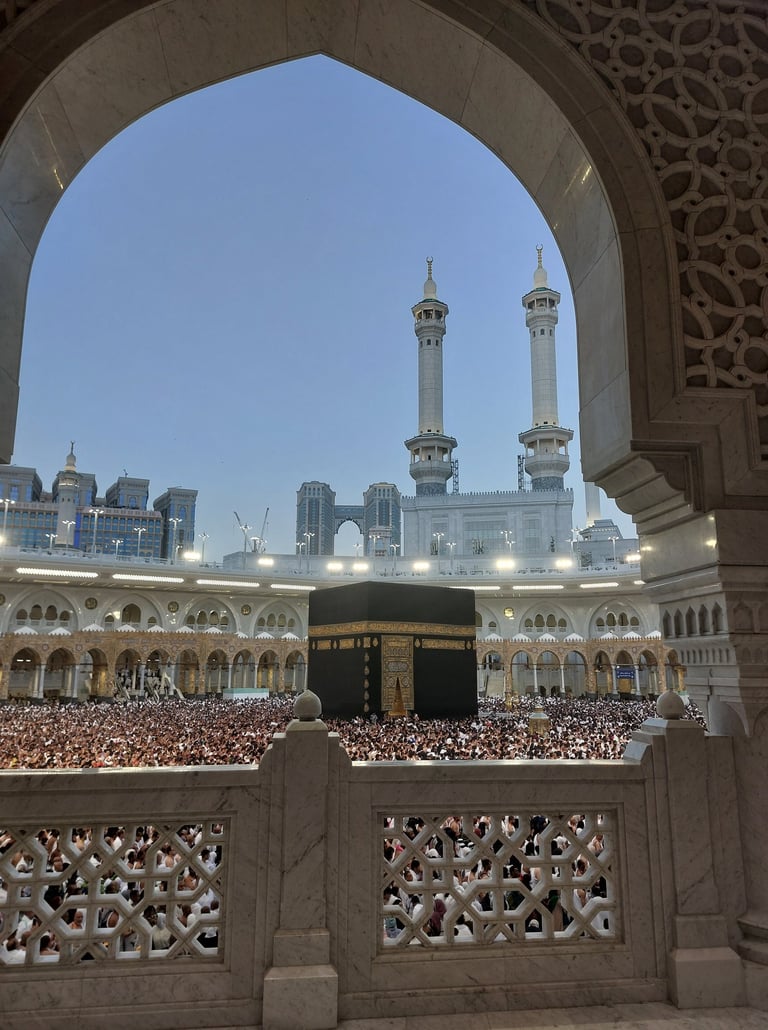
Arrival in Makkah and Proceeding to Masjid al‑Haram
Upon arrival, kindly proceed to Masjid al‑Haram with humility and gratitude.
It is recommended to enter with the right foot and make du‘a for acceptance. When you first see the Ka‘bah, many scholars encourage making heartfelt du‘a, as this is a powerful and emotional moment.
Are you traveling in a group? Take following steps before entering the Masjid to avoid getting separated:
I. Get connected: Purchase local SIM cards for all group members to stay in touch
II. Set a meeting point: Agree on the green light at ground floor as your reunion spot if anyone gets separated.
The Masjid can be very crowded, so having a plan ensures a stress-free experience for everyone.
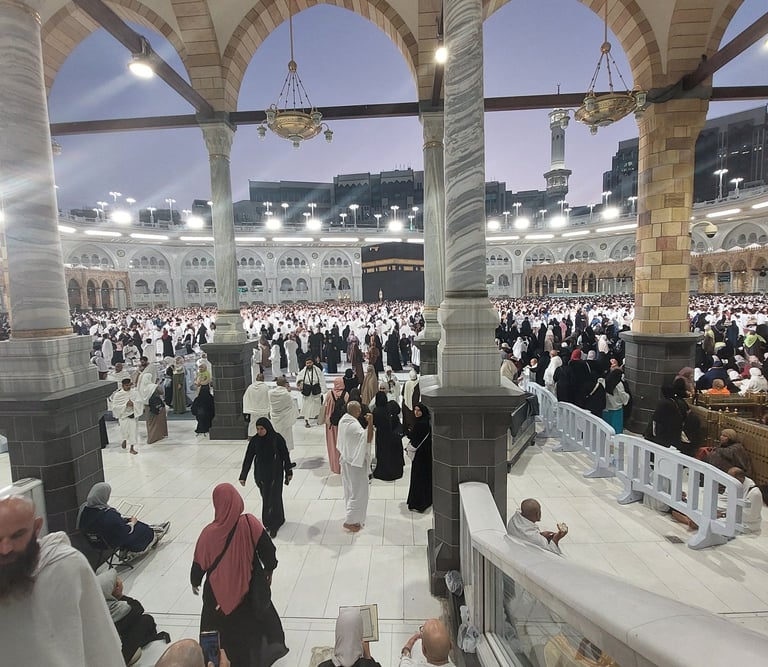
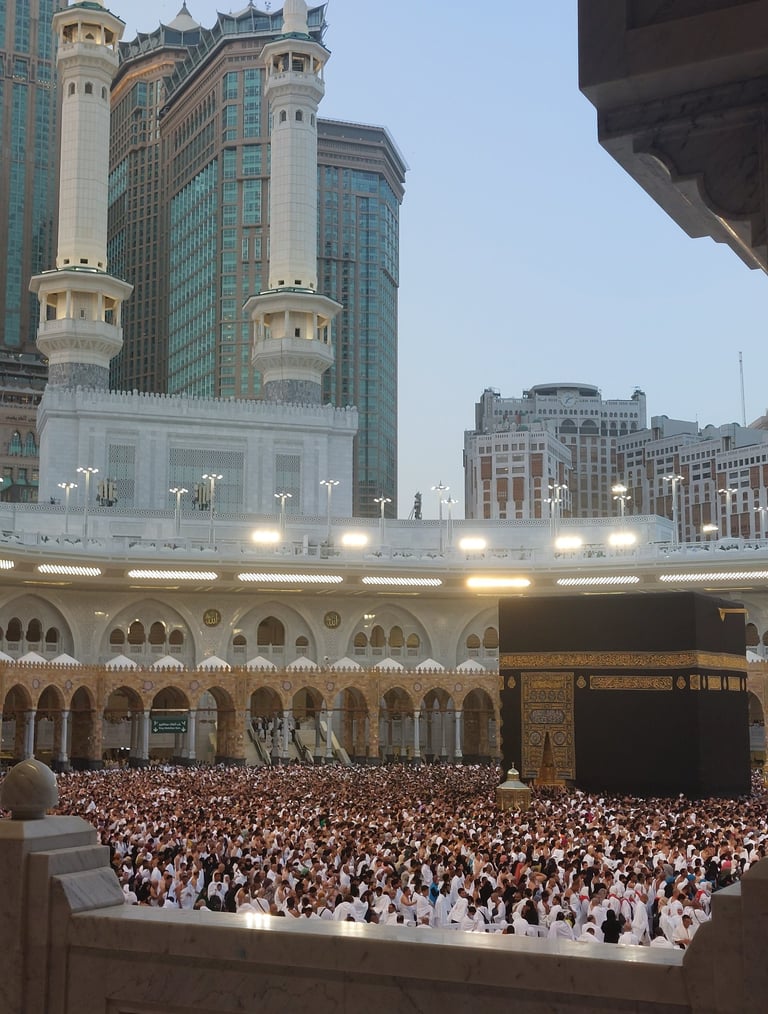
Performing Tawaf
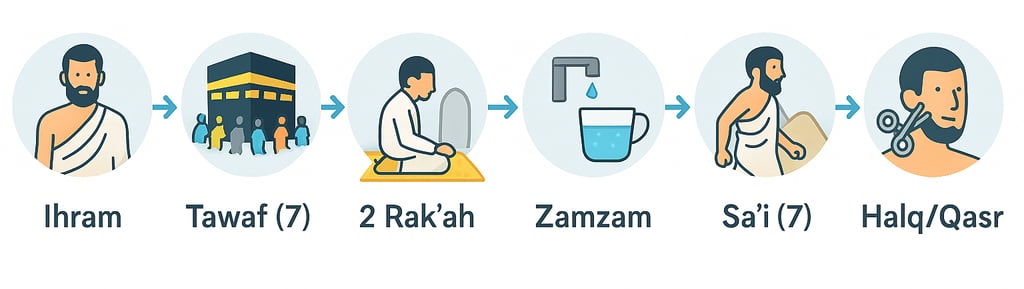
Tawaf consists of walking around the Ka‘bah seven times in an anti‑clockwise direction. It is one of the most important rituals in both Umrah and Hajj.
Steps to perform tawaf
Men may uncover the right shoulder (Idtiba) during Tawaf only.
Begin at the Black Stone (Hajar e Aswad)
Raise your hand toward it and say: “Bismillah, Allahu Akbar”
During the first three rounds, men should walk briskly but with confidence. Keep the steps short, shoulders steady but walk slightly faster that shows energy and humility without disturbing others.
Complete seven full rounds
In subsequent rounds, if the area is crowded, simply raise your hands toward Hajar e Aswaj and say "Allahu Akbar"
Between the Yemeni Corner and the Black Stone, it is sunnah to recite:
"Rabbana atina fid-dunya hasanatan wa fil-akhirati hasanatan wa qina adhaban-nar" (Our Lord, give us good in this world and good in the Hereafter, and protect us from the punishment of the Fire)
— Surah Al‑Baqarah (2:201)
There are no fixed du‘as for each round; kindly make personal supplications from the heart.
Important points
Carry a small shoe bag; you will remove footwear in the mosque.
Wudu is compulsory for performing tawaf. If you break wudu during Tawaf, renew it.
During tawaf, walk normally if it is crowded
After completing the seventh circuit, re-cover the right shoulder before praying the two rak’ahs of Tawaf.
Pray two rak‘ahs behind Maqam Ibrahim (if possible), or anywhere in the masjid
After Tawaf prayer, kindly drink Zamzam water and make sincere du‘a.
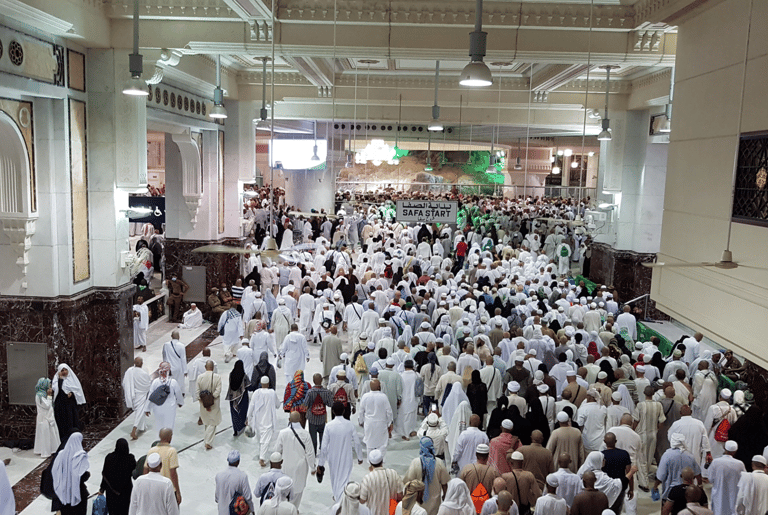
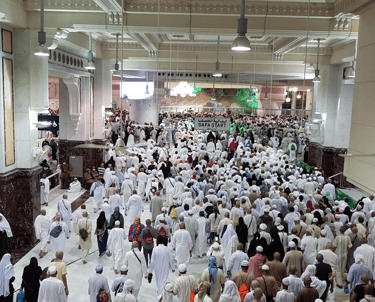
Performing Sa‘i (Between Safa and Marwah)
Sa‘i consists of walking seven times between the hills of Safa and Marwah. Sa'i commemorates the desperate search of Hajrah (A.S.) for water for her infant son Ismail (A.S.).
Allah says:
“Indeed, Safa and Marwah are among the symbols of Allah. So, whoever makes Hajj to the House or performs Umrah, there is no blame upon them for walking between them (i.e. Safa and Marwa).”
— Surah Al‑Baqarah (2:158)
The act of Sa’i – running between Safa and Marwa – teaches Muslims the value of patience, hope, and having faith in Allah.
How to Perform Sa‘i
After completing Tawaf and praying two rak'ahs, proceed to the hill of Safa
Face the Ka‘bah, and make du‘a for yourself and others
Walk toward Marwah at a normal and comfortable pace
During green lights, men should run briskly and women should continue to walk normally
Upon reaching Marwa, stand facing Ka'bah and make du'a. This completes one lap (one round)
Walk back to Safa. In this way keep going between Safa and Mara. The seven laps end at Marwah.
Important points
Kindly use the time spend in Sa'i for du‘a, dhikr, and reflection.
Unlike Tawaf, Sa'i does not require wudu (though it is recommended)
Sa'i must be performed after tawaf, not before
Each lap is approximately 450 meters. So, total distance in Sa'i is 3.15 kilometer
Halaq or Qasr
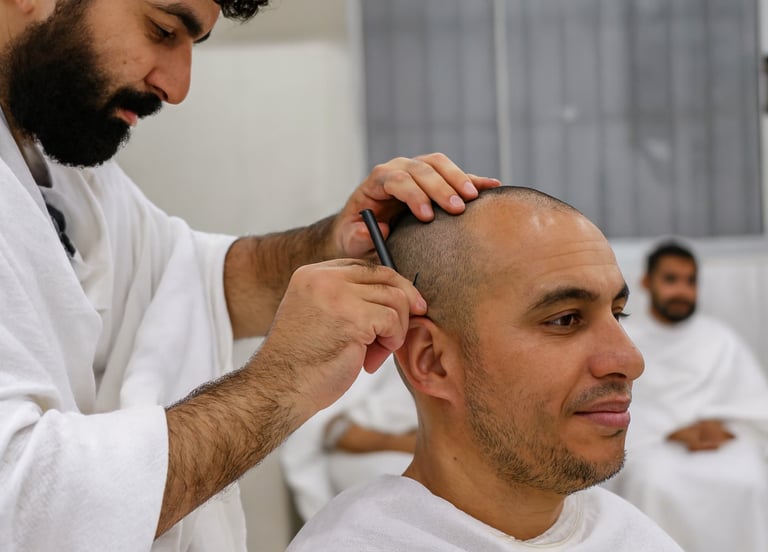
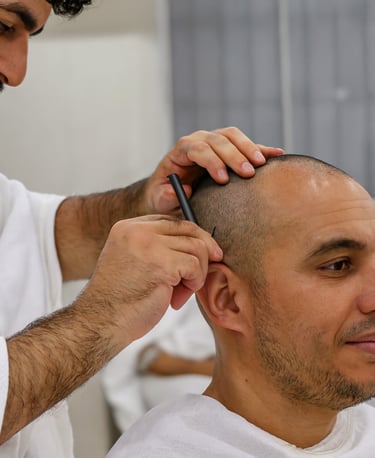
After completing Sa‘i, Umrah concludes with cutting the hair.
Men: Shave the head (Halq – preferred) or trim (Qasr)
Women: Trim a small portion (about fingertip length)
The Prophet ﷺ prayed three times for those who shaved their heads and once for those who trimmed.
— Sahih al‑Bukhari
After this step, you exit the state of Ihram, and all restrictions are lifted.
Important points
Once halaq or qasr is done, Umrah is complete and you have exited the state of Ihram.
Drink abundantly and make du'a, as the Prophet ﷺ said: "The water of Zamzam is for whatever purpose it is drunk for".
Make du'a that Allah accepts your Umrah. "Allahumma taqabbal minni umrati wa-ghfir li dhunubi innaka antal-Ghafur ur-Rahim"
"O Allah, accept my Umrah and forgive my sins, for indeed You are the Most Forgiving, Most Merciful"
Take time to reflect on your spiritual journey
Final words...
Please perform every step with sincerity, humility, and calm reflection. Umrah is not about speed or perfection in movement; it is about the devotion of the heart and the intention with which you stand before Allah. Kindly remember that every step you take around the Ka‘bah and every moment between Safa and Marwah is an opportunity to seek forgiveness, express gratitude, and renew your relationship with your Creator. Many pilgrims discover that the most meaningful moments of Umrah are the quiet ones—when the heart turns sincerely to Allah in du‘a. Please focus on patience, kindness toward fellow pilgrims, and presence in your worship. With sincere intention and devotion, even simple acts during Umrah become deeply rewarding. May Allah accept your efforts, forgive your shortcomings, and allow this blessed journey to become a turning point of spiritual closeness and lasting peace.
The Prophet ﷺ said:
“Umrah to Umrah is an expiation for what is between them.”
— Sahih al‑Bukhari, Sahih Muslim
May Allah accept your Umrah and make it easy for you.
Pilgrims are kindly requested to consult their local Imam or Mufti regarding specific rulings and personal situations before finalizing their Umrah. The information shared above is general guidance prepared for the benefit of pilgrims and to help them understand the overall process with ease.